
Water pools at the inlet
Rain collects around the grate instead of entering it.
Storm drain and catch basin cleaning removes leaves, silt, and trash from the drains that carry rain water away from a property. Call (562) 689-9697 before the rainy season. Harbor Drain Cleaning gives you a written quote that names the drains and the method.
Last updated:
The basics
Storm drain and catch basin cleaning is the removal of debris from the inlets, basins, and pipes that carry rain water off a property. A catch basin is a box with a grate and a sump that traps sediment before water enters the pipe. Cleaning restores the volume of the box and the flow through the line.
A catch basin sump, often 12 to 24 inches (30 to 60 cm) deep, fills with sand, leaves, and trash over time. When the sump is full, debris passes into the pipe and blocks it. A basin cleaned before the rainy season handles a storm, and a full one overflows.
Storm drains differ from sewer drains. They carry only rain water, and they discharge to a street, a channel, or a dry well. Indoor drains and sewer lines are described in main drain cleaning, and yard drains appear in outdoor drain cleaning.
When to call
A storm drain needs cleaning when water pools near the inlet during rain, when the catch basin is full of debris, or when a downspout backs up. Cleaning before the rainy season prevents most of these problems, and it takes far less time than repairing flood damage.
Rain collects around the grate instead of entering it.
The sump is packed with silt, leaves, and trash up to the grate.
Gutters overflow because the underground line is blocked.
Decaying leaves in standing water smell musty or sour.
The process
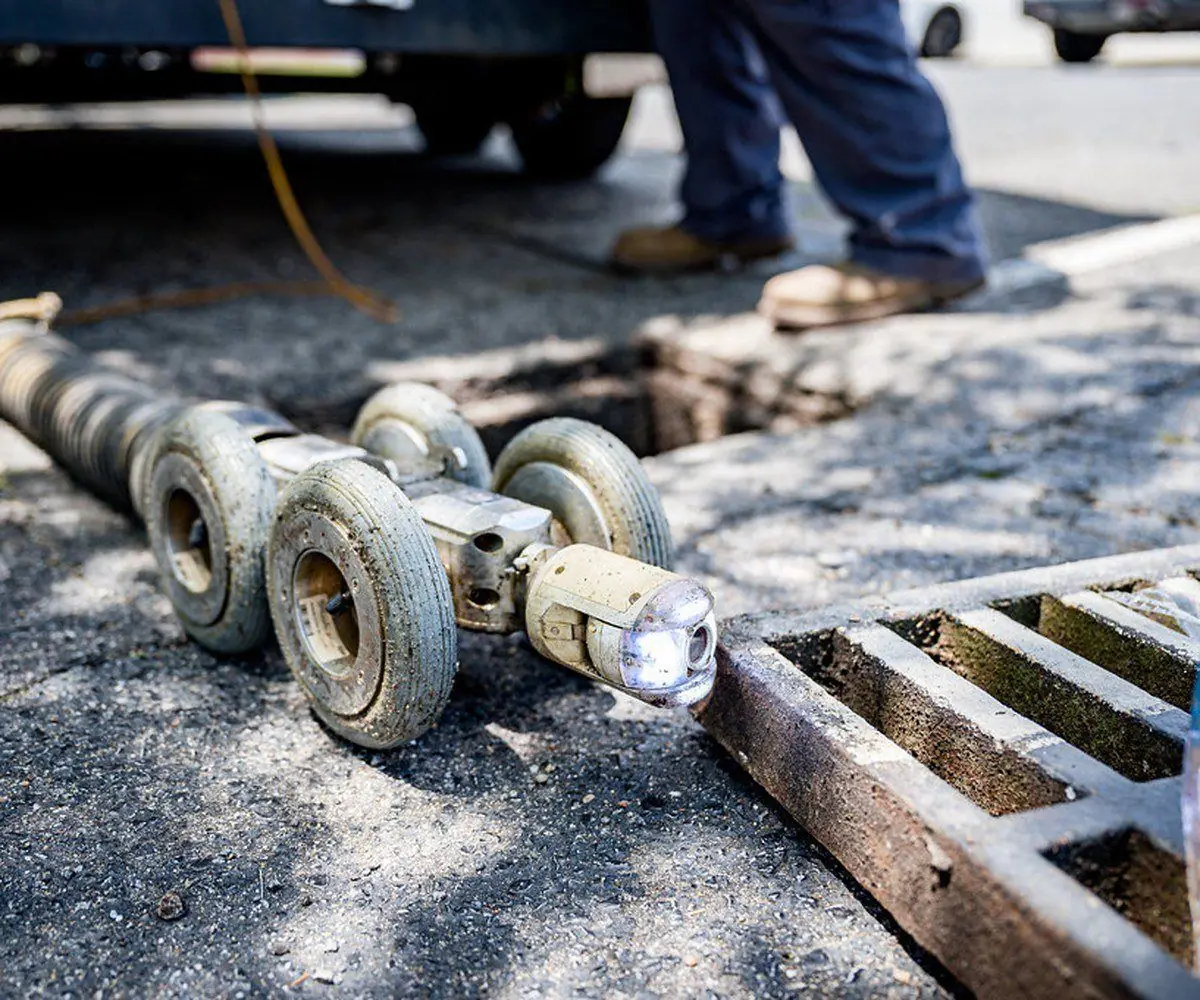
Storm drain cleaning takes five steps. The crew removes the grate, vacuums or scoops debris from the basin, cleans the outlet pipe with a cable or water jet, flushes the line to check flow, and disposes of the debris properly.
The grate lifts off and the sump is checked for depth and contents.
Silt, leaves, and trash come out with a vacuum or by hand.
A cable or water jet clears the line that leaves the basin.
A hose runs to show that water leaves the basin freely.
Debris is bagged and disposed of, not washed into the drain.
Details that matter
Responsibility follows ownership. A property owner maintains drains and catch basins on private property, and the public agency maintains inlets in the public street. Knowing which is which saves a wasted visit, so look at where the drain sits before calling.
The owner maintains downspout lines, yard drains, and basins in a private parking lot or driveway. A property manager or HOA often handles shared basins. See commercial drain cleaning for buildings with shared systems.
Catch basins in the public street are not private. Call Norwalk Public Services at (562) 929-5511 to report a blocked street inlet.
The City of Norwalk FOG Control Program bars disposing of food waste into storm drains. Oil, paint, soap suds, and wash water from cleaning also should not enter them, because storm drains carry untreated water to rivers and the ocean.
Cost factors
Storm drain cleaning costs depend on the number of basins, how full they are, and the condition of the pipe. A single basin on a home property costs less than a commercial lot with many inlets. Hydro jetting for blocked lines adds to the price.
| Storm drain factor | Lower cost when | Higher cost when |
|---|---|---|
| Basin count | One or two basins | A parking lot with many inlets |
| Debris level | Light leaves and silt | Packed sediment and trash |
| Pipe condition | Open line | Crushed or root-filled line |
| Method | Hand cleaning and vacuum | Hydro jetting |
| Timing | Before the rainy season | During or after a storm |
Storm drain pricing follows basin count and debris. These ranges are patterns, so get a written quote that lists each basin.
In Norwalk
Norwalk gets most of its rain between November and March, so debris from dry months sits in basins until the first storm moves it into the pipe. Cleaning in October or early November keeps the first heavy rain from flooding a driveway or parking lot.
Apartment complexes, shops, and offices along Norwalk's main roads typically have several private catch basins. A yearly cleaning on a schedule helps property managers avoid water damage claims.
Planning storm drain and catch basin cleaning? The Norwalk areas we cover list the three ZIP codes and the main roads, so you can match your address before you dial.
Straight answers
A catch basin is a box in the ground with a grate on top and a sump below the outlet pipe. It collects debris so only clean water enters the storm pipe. The sump needs emptying when it fills.
Clean them at least once a year, before the rainy season. Basins under trees, near construction, or on sandy sites may need two cleanings a year. A full basin cannot trap debris and may send it into the line.
Yes, for a shallow basin. Lift the grate, remove debris with a bucket or shovel, and flush the pipe. Wear gloves and boots. Call a plumber for deep basins or lines that stay blocked.
Often not. Policies vary, and flood and surface-water damage are often separate coverage. Ask your insurer, and keep records of cleaning to show the drain was maintained.
References
Ready to fix it?
Call to clean catch basins and storm drains before the rainy season and ask for a written quote.
(562) 689-9697