
Repeat clogs
The line clogs again within months of a cleaning.
Sewer line repair fixes cracked, collapsed, offset, or root-damaged pipe that cleaning cannot cure. Call (562) 689-9697 after a camera inspection shows damage. Harbor Drain Cleaning gives you a written quote that names the method, such as spot repair, pipe lining, or open-trench replacement.
Last updated:
The basics
Sewer line repair is the fixing or replacing of damaged sewer pipe between a building and the city main. The repair can be a short spot repair, a liner that seals the inside of the pipe, a pipe-bursting replacement, or an open trench replacement, and the camera video decides which one fits.
Sewer pipes fail from age, roots, soil movement, and poor installation. Older clay and cast iron pipe cracks, and Orangeburg pipe, a tar-paper product used until the 1970s, collapses. A repair is needed when cleaning clears the line but the clog returns within months.
Repair starts with a camera inspection. The video shows the damage type, location, and length. After repair, sewer line cleaning is rarely needed, and the problem is solved at the pipe rather than the clog.
When to call
A sewer line needs repair when cleaning gives only short relief. Repeat clogs, sinkholes in the yard, sewer smells outdoors, and cracked or offset pipe on camera all point to damage. A camera video separates a repair job from regular cleaning, so you pay for the right fix the first time.
The line clogs again within months of a cleaning.
Soil washes into a broken pipe and leaves a depression.
A leak releases sewage odor near the lateral.
Cracks, offsets, bellies, or collapsed sections appear on video.
The process
A sewer line repair has five steps from inspection to final test. The plumber confirms the damage on video, selects a repair method, pulls permits where needed, completes the repair, and runs a final camera check. Each step documents the work for you.
A camera shows the damage type, the location, and the length of pipe affected.
Spot repair, lining, pipe bursting, or open trench, based on the video and access.
Most sewer work needs a permit, which the contractor should pull.
The crew repairs or replaces the damaged section.
A final camera pass and flow test prove the line is sound.
Details that matter
Trenchless sewer repair fixes the pipe with little or no digging by working through existing access points. Three methods cover most jobs: pipe lining, pipe bursting, and spot repair. Open trench replacement is still used when pipe is collapsed or badly offset.
A resin-coated liner goes into the pipe and is cured with hot water or light. It creates a new pipe inside the old one and seals cracks and joints, so roots cannot enter. Lining needs a pipe that is open enough to accept the liner.
A cone pulls a new pipe through the old one while breaking the old pipe outward. It replaces the full line without a long trench, but it needs entry and exit pits.
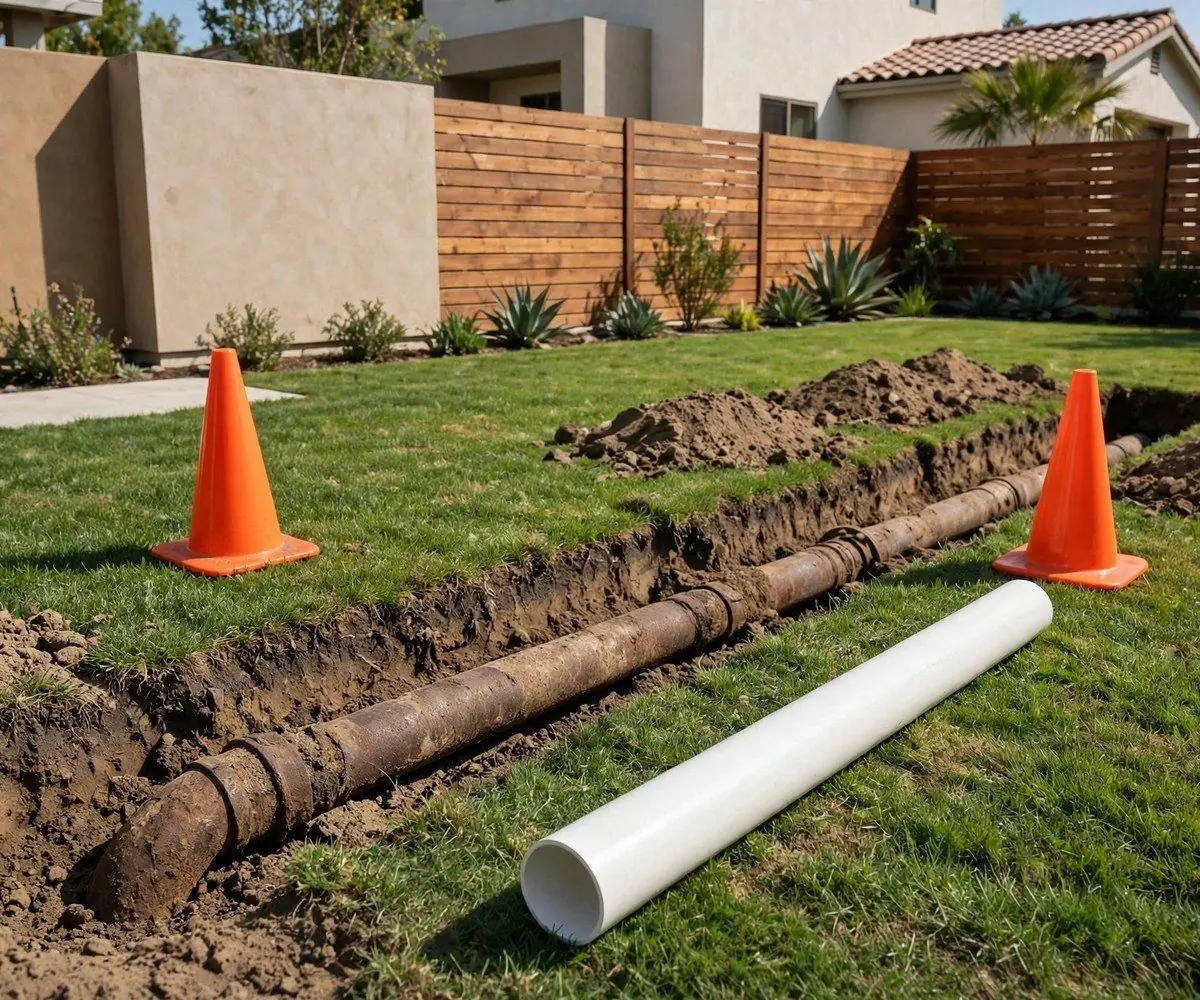
A short damaged section can be dug and replaced. Open trench replacement suits collapsed or badly offset pipe and costs the most in landscape restoration. Both may need tree root removal first.
Cost factors
Sewer line repair cost depends on the repair method, the length of the damaged pipe, the depth, and the surface above it. Trenchless methods cost more in materials but less in landscape and concrete restoration. A camera video and a written scope reduce surprises.
| Repair factor | Lower cost when | Higher cost when |
|---|---|---|
| Method | Spot repair or lining | Open trench replacement |
| Length | Short damaged section | Full lateral |
| Depth | Shallow pipe | Deep pipe under a driveway or building |
| Surface | Lawn | Concrete, patio, or street |
| Permits | Simple | Street work and inspections |
Repair prices swing widely with depth and surface. These ranges show direction only, so get a written quote after a camera inspection.
In Norwalk
In Norwalk, the property owner pays for repair of the private lateral, including the part under sidewalks, curbs, and streets. The City of Norwalk Sewer Policy states that the owner is solely responsible for the private lateral, and the city's responsibility ends at its main.
Work in a city street or sidewalk may need a city permit. Call Norwalk Public Services at (562) 929-5511 before work starts, and ask your contractor for their California contractor license number. Contractors need a license for work above the state minor-work limit.
Give your street or nearest main road when you call about sewer line repair and trenchless. The service area page shows how ZIP 90650 and the nearby streets fit together.
Straight answers
No. A camera inspection often shows that a spot repair or a liner fixes the problem. Replacement is for pipe that has collapsed, is badly offset, or has many cracks along its length.
It depends. Trenchless repair avoids digging up a yard and driveway, so it costs less in restoration. It needs pipe that is open enough for lining or bursting, and collapsed pipe may still need digging.
A spot repair or lining takes one day. A full replacement by bursting or trench can take two to four days, plus time for permits and inspections. Ask for a schedule in the written quote.
Yes. California requires a contractor license for work above the state minor-work limit, and sewer work often needs a permit. Check the license number on the CSLB website before you sign.
References
Ready to fix it?
Call to discuss a cracked or sagging sewer line and ask for a written quote that names the repair method.
(562) 689-9697