
Standpipe overflow
Water rises out of the pipe behind the washer during the drain cycle.
Laundry and utility sink drain cleaning clears the standpipe, trap, and branch line that carry washing machine and utility sink water. Call (562) 689-9697 if the washer standpipe overflows or the sink gurgles. Harbor Drain Cleaning gives you a written quote first.
Last updated:
The basics
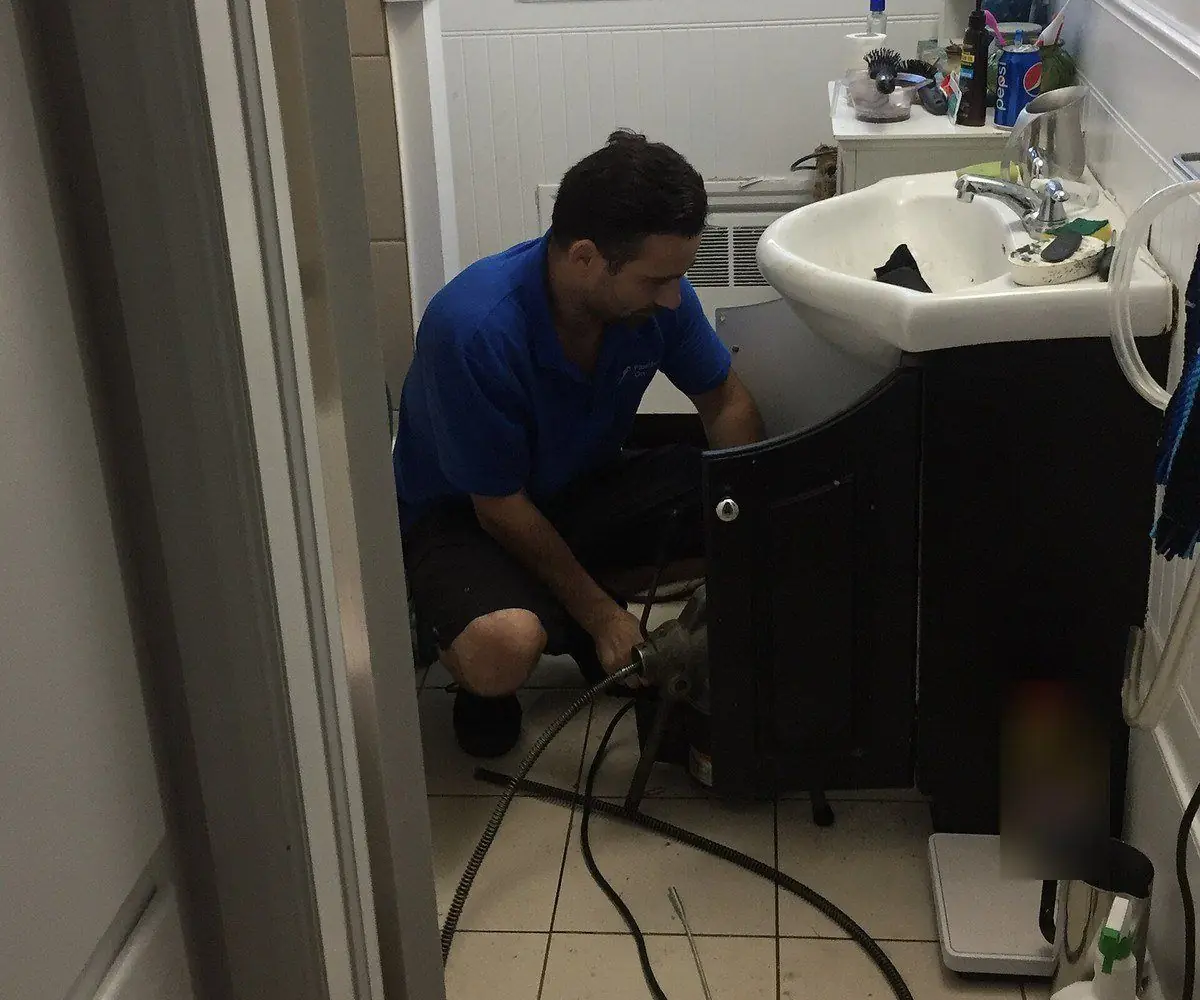
Laundry and utility sink drain cleaning is the removal of lint, soap residue, and debris from the washing machine standpipe, the trap, and the branch line that serve a laundry area or utility sink. The plumber clears the line and tests it with water at washing machine volume.
A washing machine pumps out 15 to 20 gallons (57 to 76 liters) of water in about a minute. The standpipe, usually 2 inches (5 cm) wide, must carry that surge. A clog turns a normal drain cycle into an overflow onto the laundry room floor.
Lint is the main culprit. Fibers pass the machine's filter, collect soap, and form a sticky mat. Utility sinks add grit from cleaning tasks. Because laundry lines often join the main drain, a stubborn clog may need a larger machine.
When to call
A clogged laundry drain shows itself during the washing machine's drain cycle. Water backs up in the standpipe, the utility sink fills when the washer drains, or a musty smell rises from the floor. These signs mean lint and soap have narrowed the line.
Water rises out of the pipe behind the washer during the drain cycle.
The sink shows washer water because both share one drain line.
Air bubbles through the trap when the machine empties.
Wet lint and soap in the trap produce a sour odor.
The process
Laundry drain cleaning takes five steps. The plumber disconnects the washer hose from the standpipe, clears the trap and line, then tests with a full drain cycle. Testing under real load shows whether the line can handle a washing machine surge.
The drain hose comes off the standpipe so the plumber can reach the pipe.
A small cable or auger passes through the standpipe and trap.
A longer cable clears lint buildup past the trap toward the main line.
The washer or a large bucket empties 15 gallons (57 liters) to prove the flow.
The hose goes back on, and the plumber checks for leaks and loose fittings.
Details that matter
Laundry drain clogs are easier to prevent than most because lint is the main cause. A lint trap on the washer hose and a regular cleaning schedule cut the buildup. Three habits keep a laundry standpipe flowing and avoid overflows onto the floor.
A mesh lint trap on the end of the washer drain hose catches fibers before they enter the pipe. Replace it when it wears out, about every year or two.
Pouring large buckets of water into a utility sink at once can overflow a partly blocked trap. Pour slowly, and avoid dumping paint, grout, or plaster, which harden in the pipe.
In some Norwalk homes, the laundry area includes a floor drain that shares the line. If that drain smells or backs up, read about floor drain cleaning.
Cost factors
Laundry drain cleaning costs less when the clog is in the standpipe and costs more when it sits farther down the line. Shared lines, hard debris like grout, and a standpipe that is built too short or too narrow can add time and parts.
| Laundry factor | Lower cost when | Higher cost when |
|---|---|---|
| Clog location | Standpipe or trap | Branch line shared with other fixtures |
| Cause | Lint and soap | Hardened grout, paint, or roots |
| Standpipe | Correct size and height | Undersized or too short |
| Method | Hand auger | Cable machine |
| Test | Single drain cycle | Repeat tests after repair |
Laundry lines clog from lint more than from grease, so prices stay moderate. Ask the plumber to confirm the price after checking the standpipe.
In Norwalk
In Norwalk, the laundry line joins the home's drain system and flows to the sewer lateral, which the property owner maintains. The City of Norwalk Sewer Policy lists the owner as solely responsible for the private lateral, so a washer backup that spreads to other fixtures usually points to the owner's side.
If water from the washer rises in a shower or tub, the main line is the likely cause, not the standpipe. That pattern needs clogged drain repair on the shared line.
Coverage for laundry and utility sink drain cleaning follows the city limits, so every Norwalk address qualifies. See the service areas for the roads and landmarks we use to find your property.
Straight answers
A clog in the standpipe, trap, or branch line stops the drain surge. Lint and soap build up over months until the line cannot carry 15 to 20 gallons (57 to 76 liters) per minute. A cable cleaning usually restores the flow.
Yes. A kinked or crushed hose, or a hose pushed too far into the standpipe, can restrict the flow and cause siphoning. Check the hose before calling a plumber, and keep the hose end 2 inches (5 cm) in.
No. Gurgling means air is fighting through a restricted trap or vent. It is an early warning of a clog or a blocked vent, and it often comes before an overflow.
Most laundry drains need cleaning only when they slow down. Homes with heavy laundry loads or pet hair benefit from a cleaning every two to three years. A lint trap on the hose reduces the need.
References
Ready to fix it?
Call about a laundry drain that overflows or a slow utility sink and get a written quote first.
(562) 689-9697