
Slow kitchen drains
Sinks and floor drains in the kitchen empty slowly.
Grease trap cleaning keeps restaurant kitchen drains flowing and helps meet the City of Norwalk FOG rules. Call (562) 689-9697 to discuss your kitchen lines. Harbor Drain Cleaning gives you a written quote that separates line jetting from interceptor pumping, which a licensed hauler must do.
Last updated:
The basics
Grease trap cleaning is the removal of fats, oils, and grease (FOG) and food solids from a grease trap or interceptor, plus the cleaning of the kitchen drain lines that feed it. The trap holds FOG so it does not reach the sewer, and it must be cleaned before it fills.
Under the City of Norwalk FOG Control Program, a grease interceptor must be fully cleaned once accumulated FOG and solids reach 25 percent of its volume. The program says a certified or licensed waste hauler must do the cleaning, and it does not allow hot water or chemicals to dissolve the grease.
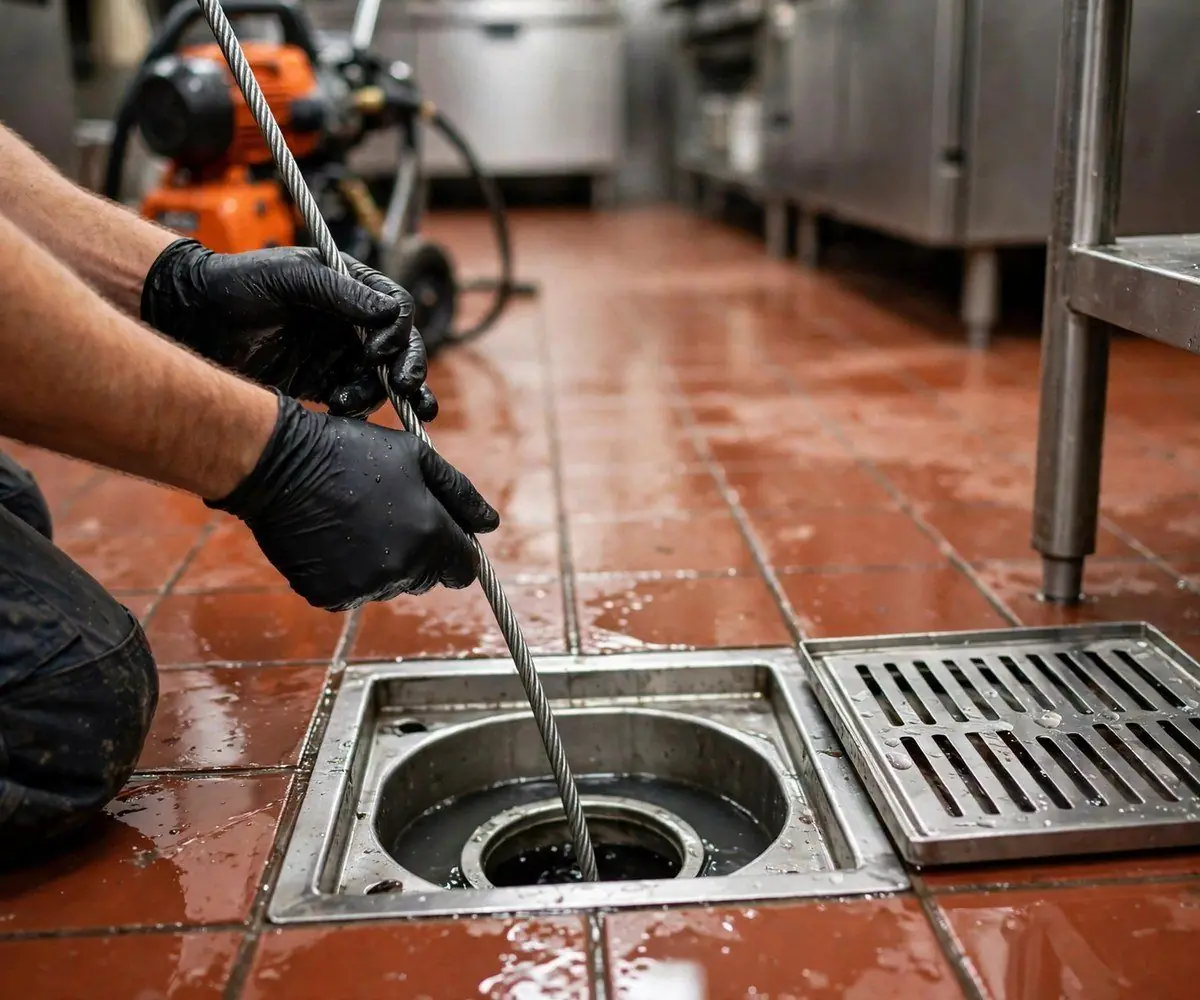
Drain line cleaning is a separate job. A plumber can clear the kitchen drain lines with a cable or hydro jetting, while the interceptor itself goes to a licensed hauler. Ask for both steps in writing so that no one assumes the other is covered.
When to call
A grease trap needs cleaning when kitchen drains slow down, when odor comes from the trap area, or when a manual check shows FOG and solids near the 25 percent mark. Waiting causes backups, health inspection trouble, and sewer overflows that carry violations.
Sinks and floor drains in the kitchen empty slowly.
Rotting grease and food smell sour or rancid.
A measurement shows FOG and solids at one quarter of the volume.
Wastewater rises from floor drains during service.
The process
A grease trap cleaning has five steps. A licensed hauler pumps the interceptor, scrapes the walls, and disposes of the waste. The drain lines before and after the trap are then cleaned and tested. Records of each visit go in the kitchen's log.
The hauler measures FOG and solids against the 25 percent rule.
A vacuum truck removes the FOG, water, and solids.
The walls, baffles, and covers are cleaned and checked for damage.
A plumber jets the kitchen drain lines that feed the trap.
The manifest and cleaning log are kept for city and county inspectors.
In Norwalk
The City of Norwalk FOG Control Program sets the rules, and the County inspects permitted food service establishments at least once a year. Violations can bring fines, and each day of violation counts separately, so staying on schedule protects the business.
Homes follow a different rule. The program notes that individual dwelling units do not need a grease interceptor, but grease still clogs home pipes. See kitchen sink drain cleaning for household kitchens.
Restaurant Grease Trap Cleaning is available across the city, from the main roads to the side streets. Check the Norwalk service areas to confirm that your street is covered.
Cost factors
Grease trap cleaning cost depends on the interceptor size, how full it is, and how often it is serviced. Kitchen line jetting is a separate cost from pumping. Frequent service costs less per visit because there is less FOG to remove.
| Grease factor | Lower cost when | Higher cost when |
|---|---|---|
| Interceptor size | Small under-sink trap | Large in-ground interceptor |
| Fill level | Below 25 percent | Overdue and packed with solids |
| Service | Pumping only | Pumping plus line jetting |
| Frequency | Regular schedule | One-time emergency visit |
| Records | Log kept by the kitchen | Missing logs and reconstruction |
Grease work splits between line cleaning and interceptor pumping, and each has its own price. Ask for both in writing.
Details that matter
Norwalk's FOG Control Program applies to food service establishments, including restaurants, commercial kitchens, caterers, hotels, schools, and hospitals. It sets rules for interceptors, cleaning, records, and kitchen habits. The points below summarize the program, and the city has the full text.
Interceptors must be cleaned when FOG and solids reach 25 percent of volume. The program says kitchens should inspect and record FOG buildup at least every three months, and keep logs of inspections, cleaning, and disposal for the city.
The program calls for dry cleanup first, scraping plates into the trash, mesh screens with 1/8- to 3/16-inch (3 to 5 mm) openings on kitchen drains, and storing used cooking oil for a licensed hauler or recycler.
The program prohibits discharging wastewater above 140°F (60°C) and adding chemical, enzyme, or bacterial agents to grease systems. Check the current program with the City before changing your cleaning plan. See commercial drain cleaning for other building lines.
Straight answers
Clean it whenever FOG and solids reach 25 percent of the interceptor volume, as the City of Norwalk FOG Control Program requires. Many kitchens need pumping every 1 to 3 months, and busy kitchens may need it more often.
A plumber can clean the drain lines, but the City's program says interceptor cleaning must be done by a certified or licensed waste hauler. Ask the plumber who will do each part and get both in writing.
No. The City of Norwalk FOG Control Program prohibits chemical, enzyme, and bacterial agents in grease systems, and it does not allow hot water to dissolve grease. Pumping and scraping are the approved methods.
FOG reaches the sewer, causes backups, and can lead to an inspection violation. The program lists fines for a first administrative violation, with higher fines for repeats and misdemeanor charges for serious cases.
References
Ready to fix it?
Call about restaurant kitchen drain lines and ask who will handle the line work and who will pump the interceptor.
(562) 689-9697